
Specialized Coaching
Brain-Based Techniques
Functional Neurology, Brain Mapping, Neurofeedback, QNRT, Neuroinfinity, Brain Tap and More.
You realize that regardless of what is going on with a patient's health, the brain must be involved. In chiropractic, we know that a subluxation is an interference in the communication between the brain and the body and the body and the brain. You understand the state of dysafferentation and dysafferentation — and that the brain sits right in the middle. You might be using Neuroinfinity. You might be doing brain mapping or neurofeedback. You might use QNRT, NET, clinical or functional neurology, or hands-on work with the spine, extremities, and nutrition alongside your brain-based work. This is a new world — and hardly any coaches understand how all of this sits under one roof in your practice. I do.
The story that makes it click for patients
In this office, we operate from a simple principle: Brain First. Everything goes through the brain. It controls and coordinates every function in the body.
Helping patients understand this is easy. Just ask them: What controls and coordinates everything in your body? Almost everyone will answer, the brain.
Then ask: What would happen if your brain were sending the wrong signals to the area of your chief complaint? That starts to click.
Next: What if that area were sending the wrong information back to the brain? Could the brain make the right changes for healing? Of course not.
Most of us are familiar with that line of thinking—the fire alarm analogy, being chased by a lion, and so on.
But what happens when we don't focus only on the brain?
Many of my brain-based practitioners also address biochemical stress (like nutrition), mental-emotional stress, and physical stressors—including subluxations. Here's a simple way to explain that:
Let's take a common complaint—anxiety.
I draw a triangle with three sides: mental-emotional, biochemical, and physical, and in the center I write: Brain First.
Then I say: imagine three people in this room all experiencing anxiety.
One has a nail stuck in their foot. Could that cause anxiety? Yes.
Another drinks too much coffee. Could that cause anxiety? Yes.
The third has years of emotional trauma and ongoing stress. Could that cause anxiety? Yes.
Now ask: Would the solution be the same for all three? Of course not.
One needs the nail removed. One needs to reduce caffeine. One needs to address emotional stress.
Different causes. Different solutions.
But in every case, the brain is involved.
So, while the care plan isn't the same for each person, one principle remains true: nothing can heal properly if the brain isn't functioning well.
That's why, in this office, we take a comprehensive approach. We start with a full brain evaluation, and we also assess mental-emotional, biochemical, and physical stressors—so we can support the body from every angle and help the brain function at its best.
That's a story patients understand—and it sets you apart.
The Challenge
The Unique Challenges You Face — That Generic Coaching Ignores
Most practice coaching programs were built for conventional clinics. If your work focuses on the brain and nervous system, you've felt the gap. Dr. Rosen has spent 25+ years coaching practitioners like you.
Helping patients understand why brain function affects everything else
Connecting brain function to peripheral symptoms requires a specific communication framework that builds value without losing the patient in complex science.
Explaining why treatments in one area affect symptoms in another
When you work on the brain, the results show up everywhere. Helping patients understand this 'Brain First' model is key to long-term enrollment.
Getting patients to commit to longer, deeper care protocols
Brain-based change takes time. You need systems that help patients value the process as much as the outcome.
Communicating the value of multiple modalities under one roof
If you use Neurofeedback, QNRT, Neuroinfinity, Nutrition, NET, Chiropractic techniques, and hands-on work, you need a way to explain how they all work together toward one goal.
Marketing a practice that most people have never seen before
You aren't a traditional clinic. Your marketing needs to reflect your unique expertise and attract the patients who are looking for exactly what you do.
Why OHC Is Different
He Coaches Practitioners Like You — Not the Practice Other Coaches Wish You Had
Most practice coaches only know one model: high volume, quick adjustments, see as many patients as possible. If you're a specialist who delivers deep, transformational brain-based care, those coaches don't just misunderstand you — their advice will actively hurt your practice.
Dr. Rosen built the OHC system around a completely different model — the Care vs. Scare True Optimal Health model — where patients truly understand the value of what you offer, commit to the full course of care, and refer everyone they know.
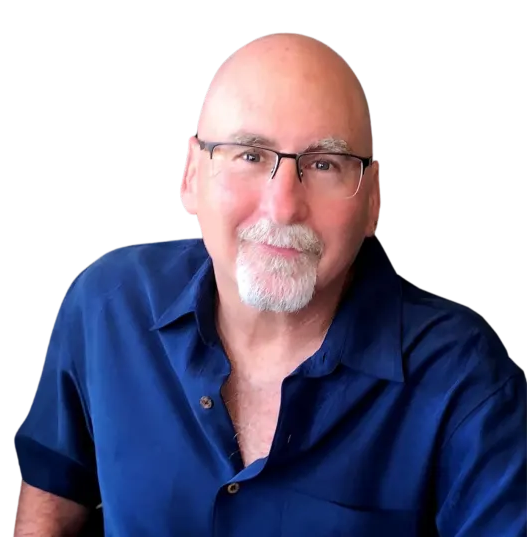
Hear from the Founder of QNRT Himself
Dr. John Turner
Founder & Creator of QNRT and Quantum Shift Technique
Metro Atlanta, GA
"We could be a great practitioner… but we still may struggle with our ability to teach our clients what it is that we do. Being able to communicate that can be very difficult — and that's exactly what Dr. Rosen helps you do."
Dr. John Turner — the founder and creator of Quantum Neurological Reset Therapy and Quantum Shift Technique — knows better than anyone what it takes to build a thriving brain-based wellness practice. His Metro Atlanta clinic runs on 100% referrals, and he credits that success to helping clients truly understand what they're receiving and why it matters.
That's exactly why he recommends Dr. Rosen. As one of the few coaches certified in both QNRT and QST, Dr. Rosen understands every aspect of these treatment protocols — and more importantly, knows how to help practitioners communicate them at a neurological level, so clients genuinely get it.
"One of the reasons doctors like us Don't Thrive and the 'Story' that fixes it!"
Real Results
What Practitioners Say
Michael Dody, D.C.
How the 5 Systems Apply to Your Practice
The OHC framework isn't a generic playbook. It's a flexible framework that adapts to your specific modality and patient communication challenges.
System 1: Headspace & Certainty
Build unshakeable confidence in the value of your brain-based work, especially when explaining it to skeptical patients.
System 2: Business & Team
Structure your practice for growth without becoming a high-volume assembly line.
System 3: Patient Communication
Help patients truly understand the 'Brain First' model so they choose to stay for the full transformation.
System 4: Marketing
Attract the right patients who are already looking for sophisticated, root-cause neurological solutions.
System 5: Flow & Growth
Maintain momentum and scale your practice while maintaining the quality of care your patients deserve.
See how the full framework works
Explore the 5 SystemsReady to Build the Practice Your Patients Deserve?
Book a 30-minute strategy call with Dr. Rosen. No pressure, no scripts — just an honest conversation about your practice.